2026年2月15日「モバイル英語学習」第907号(英語ストーリ): Yuki-onna by Lafcadio Hearn (Part 4)

Notes

  • affection; 愛情、慈しみ
  • bore (bearの過去形); 子を産んだ(こうんだ)
  • peasant; 小作農、田舎の人
  • stooped; かがんだ、身を乗り出した
  • whispering; ささやき
  • flung (flingの過去形); 投げ捨てた
  • shrieked; 悲鳴を上げた
  • spired; 渦を巻いて昇った
  • shuddered away; 震えながら消えていった

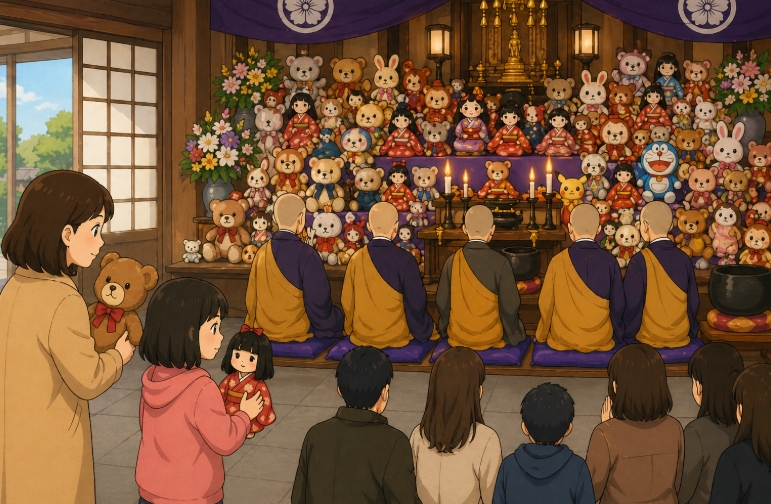
O-Yuki proved a very good daughter-in-law. When Minokichi’s mother came to die,—some five years later,—her last words were words of affection and praise for the wife of her son.

O-Yuki as a daughter-in-law

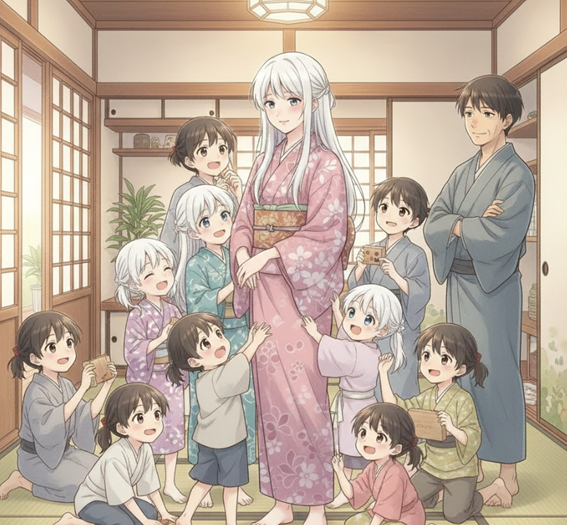
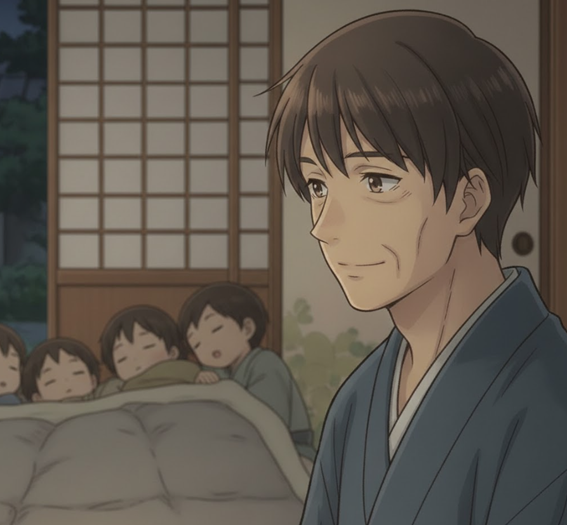
And O-Yuki bore Minokichi ten children, boys and girls,—handsome children all of them, and very fair of skin.

O-Yuki's children

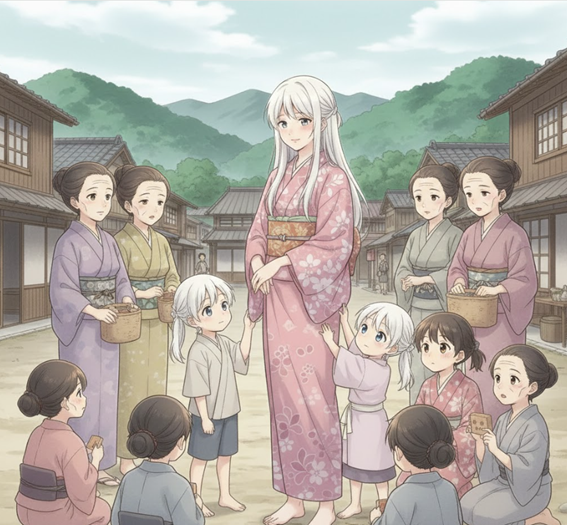
The country-folk thought O-Yuki a wonderful person, by nature different from themselves. Most of the peasant-women age early; but O-Yuki, even after having become the mother of ten children, looked as young and fresh as on the day when she had first come to the village.

O-Yuki's youthfulness

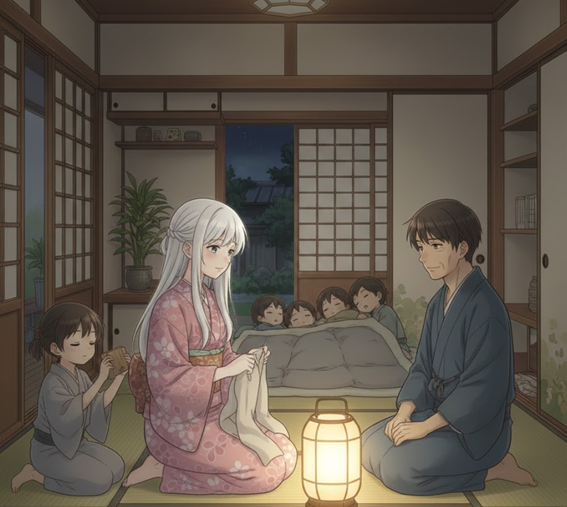
One night, after the children had gone to sleep, O-Yuki was sewing by the light of a paper lamp; and Minokichi, watching her, said:—

Minokichi watching O-Yuki

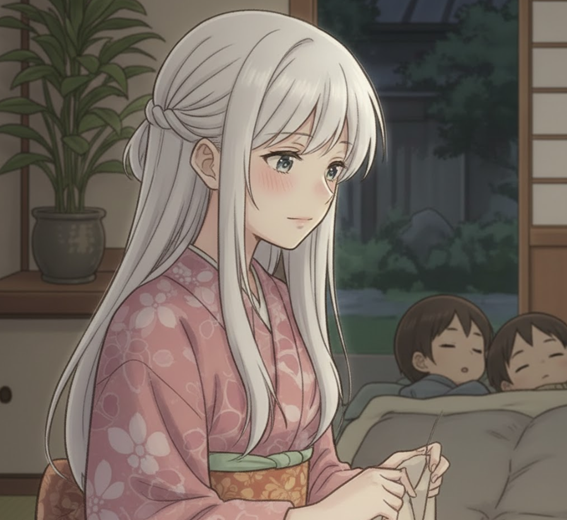
“To see you sewing there, with the light on your face, makes me think of a strange thing that happened when I was a lad of eighteen. I then saw somebody as beautiful and white as you are now—indeed, she was very like you.”…

Minokichi's memory

Without lifting her eyes from her work, O-Yuki responded:—
“Tell me about her… Where did you see her?”

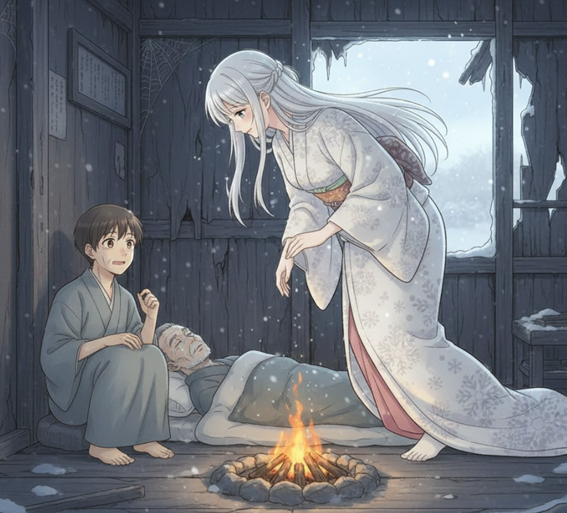
Then Minokichi told her about the terrible night in the ferryman’s hut,—and about the White Woman that had stooped above him, smiling and whispering,—and about the silent death of old Mosaku.

The terrible night

And he said:—
“Asleep or awake, that was the only time that I saw a being as beautiful as you. Of course, she was not a human being; and I was afraid of her,—very much afraid,—but she was so white!… Indeed, I have never been sure whether it was a dream that I saw, or the Woman of the Snow.”…

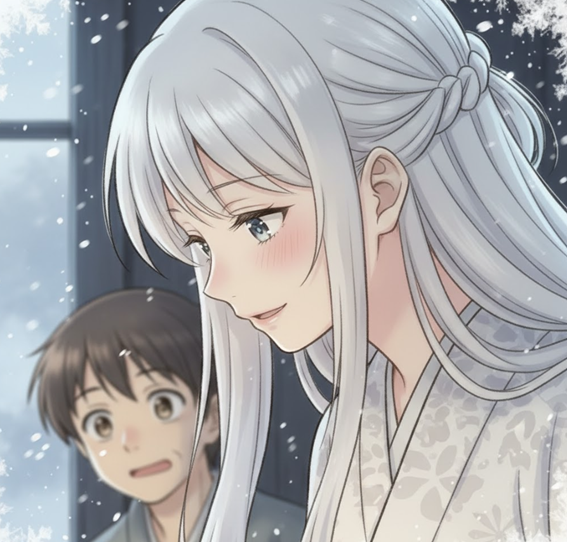
The Woman of the Snow

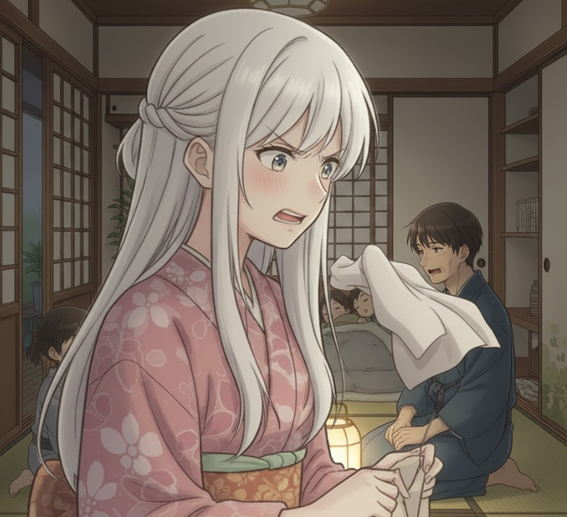
O-Yuki flung down her sewing, and arose, and bowed above Minokichi where he sat, and shrieked into his face:—
“It was I—I—I! Yuki it was! And I told you then that I would kill you if you ever said one word about it!… But for those children asleep there, I would kill you this moment! And now you had better take very, very good care of them; for if ever they have reason to complain of you, I will treat you as you deserve!”…

O-Yuki's anger

Even as she screamed, her voice became thin, like a crying of wind;—then she melted into a bright white mist that spired to the roof-beams, and shuddered away through the smoke-hole…. Never again was she seen.
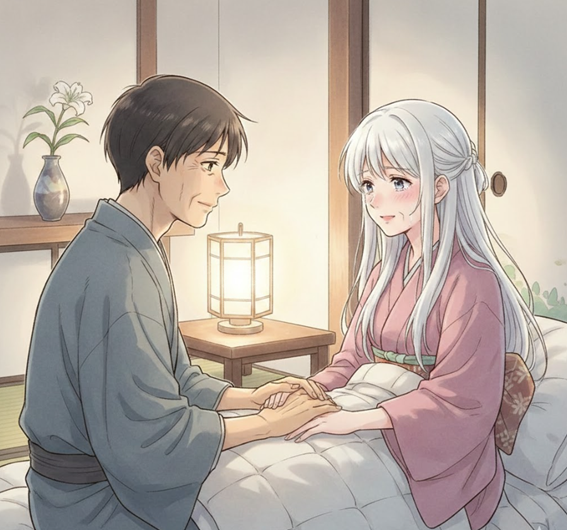
O-Yuki vanishing
📖 全文の日本語訳 / Full Japanese Translation

お雪は、とても素晴らしい嫁となりました。それから5年ほどして、巳之吉の母が亡くなる際、彼女が最後に残した言葉は、息子の妻(お雪)への愛情と褒め言葉でした。お雪は巳之吉との間に10人の子供を授かりました。男の子も女の子も、みんな美しい顔立ちで、肌の白い子供たちでした。

村の人々は、お雪を自分たちとは生まれつきどこか違う、不思議な人だと思っていました。村の女たちの多くは早くに老けてしまいますが、お雪は10人の子供の母親になっても、初めて村に来たあの日と同じように、若々しく瑞々(みずみず)しいままでした。

ある夜、子供たちが寝静まった後、お雪が紙行灯の光のそばで縫い物をしていました。それを見ていた巳之吉が言いました。「灯りに照らされた君がそこで縫い物をしている姿を見ていると、私が18歳の若者だった頃に起きた、奇妙な出来事を思い出すよ。あの時、今の君と同じくらい白くて美しい人を見たんだ。本当に、君によく似ていた……」

お雪は手元の仕事から目を上げることなく、こう答えました。「その人のことを話してください……。どこでその人に会ったのですか?」

そこで巳之吉は、渡し守の小屋で過ごしたあの恐ろしい夜のこと、自分の上に身をかがめ、微笑みながらささやいた「白い女」のこと、そして老いた茂作が静かに息を引き取ったことを話しました。そして彼は言いました。「夢か現(うつつ)か、君のように美しい存在を見たのはあの時だけだ。もちろん、あれは人間ではなかった。私は彼女が怖かった……とても怖かった。けれど、本当に白かったんだ! ……実を言うと、あれが夢だったのか、それとも『雪おんな』だったのか、今でも確信が持てないんだよ……」

お雪は縫い物を投げ捨てて立ち上がると、座っている巳之吉の上に身を乗り出し、彼の顔に向かって鋭く叫びました。「それは私、私、私だったのです! 雪だったのです! あの時、もしこのことを一言でも口にしたら殺すと伝えたはずです! ……あそこで眠っている子供たちがいなければ、今この瞬間にあなたを殺していたでしょう。さあ、これからは子供たちのことを、くれぐれも、くれぐれも大切に育てなさい。もし子供たちがあなたに不満を漏らすようなことがあれば、その時は容赦しません!」

彼女が叫んでいる間にも、その声は風の鳴る音のように細くなっていきました。そして彼女は、屋根の梁(はり)へと立ち昇る輝く白い霧へと溶けていき、煙出しの穴から震えるように消えていきました……。それ以降、彼女の姿を見た者は二度といませんでした。

2026年2月7日「モバイル英語学習」第906号(英語ストーリ): Yuki-onna by Lafcadio Hearn (Part 3)

Notes

senseless 意識を失った状態、失神した; .
calling 天職、職業、家業;
overtook 追いついた、追い越した;
betrothed 婚約した;
confidences 打ち明け話、秘密の話;
fancy 好み;
****************************
By dawn the storm was over; and when the ferryman returned to his station, a little after sunrise, he found Minokichi lying senseless beside the frozen body of Mosaku. Minokichi was promptly cared for, and soon came to himself; but he remained a long time ill from the effects of the cold of that terrible night. He had been greatly frightened also by the old man’s death; but he said nothing about the vision of the woman in white. As soon as he got well again, he returned to his calling,—going alone every morning to the forest, and coming back at nightfall with his bundles of wood, which his mother helped him to sell.

One evening, in the winter of the following year, as he was on his way home, he overtook a girl who happened to be traveling by the same road. She was a tall, slim girl, very good-looking; and she answered Minokichi’s greeting in a voice as pleasant to the ear as the voice of a song-bird. Then he walked beside her; and they began to talk. The girl said that her name was O-Yuki;[2] that she had lately lost both of her parents; and that she was going to Yedo , where she happened to have some poor relations, who might help her to find a situation as a servant. Minokichi soon felt charmed by this strange girl; and the more that he looked at her, the handsomer she appeared to be. He asked her whether she was yet betrothed; and she answered, laughingly, that she was free. Then, in her turn, she asked Minokichi whether he was married, or pledged to marry; and he told her that, although he had only a widowed mother to support, the question of an “honorable daughter-in-law” had not yet been considered, as he was very young… After these confidences, they walked on for a long while without speaking; but, as the proverb declares, Ki ga aréba, mé mo kuchi hodo ni mono wo iu: “When the wish is there, the eyes can say as much as the mouth.” By the time they reached the village, they had become very much pleased with each other; and then Minokichi asked O-Yuki to rest awhile at his house. After some shy hesitation, she went there with him; and his mother made her welcome, and prepared a warm meal for her. O-Yuki behaved so nicely that Minokichi’s mother took a sudden fancy to her, and persuaded her to delay her journey to Yedo. And the natural end of the matter was that Yuki never went to Yedo at all. She remained in the house, as an “honorable daughter-in-law.”
****************************

📖 全文の日本語訳 / Full Japanese Translation

夜明けまでに嵐は去っていた。日の出の少し後、船頭が渡し場に戻ってくると、凍りついた茂作の遺体の傍らで、巳之吉が意識を失って倒れているのを見つけた。巳之吉はすぐに介抱されて程なく意識を取り戻したが、あの恐ろしい夜の寒さがたたり、長い間病に伏せった。また、老人の死にひどく怯えてもいたが、あの白衣の女の幻影については何も口にしなかった。体が回復するとすぐに、彼は再び家業に戻った。毎朝一人で森へ出かけ、夕暮れ時には薪の束を背負って帰り、それを母親に手伝ってもらいながら売り歩いた。

翌年の冬のある晩、帰路についていた彼は、たまたま同じ道を旅していた一人の娘に追いついた。彼女はすらりと背が高く、たいそう見栄えのする娘だった。巳之吉の挨拶に応える彼女の声は、まるで歌鳥のさえずりのように心地よく耳に響いた。それから彼は彼女の隣を歩き、二人は言葉を交わし始めた。娘は名を「お雪」といい、近ごろ両親を亡くしたばかりで、江戸へ向かっているところだと言った。そこには貧しい親類がおり、奉公先を見つける手助けをしてくれるかもしれないという。

巳之吉はすぐにこの見知らぬ娘に魅了された。見つめれば見つめるほど、彼女は美しく見えた。彼が、もう婚約者がいるのかと尋ねると、彼女は笑いながら、自分は自由の身だと答えた。今度は彼女が巳之吉に、妻がいるのか、あるいは結婚の約束をしているのかと尋ねた。彼は、養うべき未亡人の母がいるだけで、自分はまだとても若く、「お嫁さん」を迎える話などまだ考えたこともないと話した。……このような打ち明け話の後、二人はしばらく何も語らずに歩き続けた。

しかし、ことわざにも「気があれば、目も口ほどに物を言う」とある通りである。村に着く頃には、二人は互いをたいそう気に入っていた。そこで巳之吉は、家で少し休んでいかないかとお雪を誘った。彼女は内気に躊躇していたが、やがて彼について家へ入った。巳之吉の母は彼女を歓迎し、温かい食事を用意した。お雪の振る舞いがあまりに素晴らしかったので、母親は一変して彼女を気に入り、江戸への旅を遅らせるよう説得した。そして、事の自然な成り行きとして、お雪が江戸へ行くことはついになかった。彼女は「お嫁さん」として、その家に留まったのである。