Notes:
confectioner: 菓子屋; 菓子製造人;
outlet: 小売店,特約店;
**************************
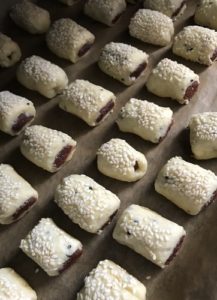
Kyoto and Kanazawa are well known for Wagashi, as is Matsue. Matsue has been known as a Wagashi-producing town since the late Edo period. Harusato Matsudaira (1751-1818), who was a lord of the Matsue domain, promoted the tea ceremony. Because of these two connections Wagashi is often served with ceremonial tea (matcha) and has gained popularity throughout Matsue and beyond. Surprisingly to some, Wagashi confectioners of Matsue even sell Wagashi in New York City. First, they started to hold annual promotional events in 2004, after which Wagashi started appearing in supermarkets around 2009. Moreover, two new outlets started to sell Wagashi in October last year. I hope this project will be successful and that Wagashi continues to become more popular all over the world. (written by student Mr. Harada, edited by Prof. Simon Smith)
**************************